Wall Street · CA Daily Wire
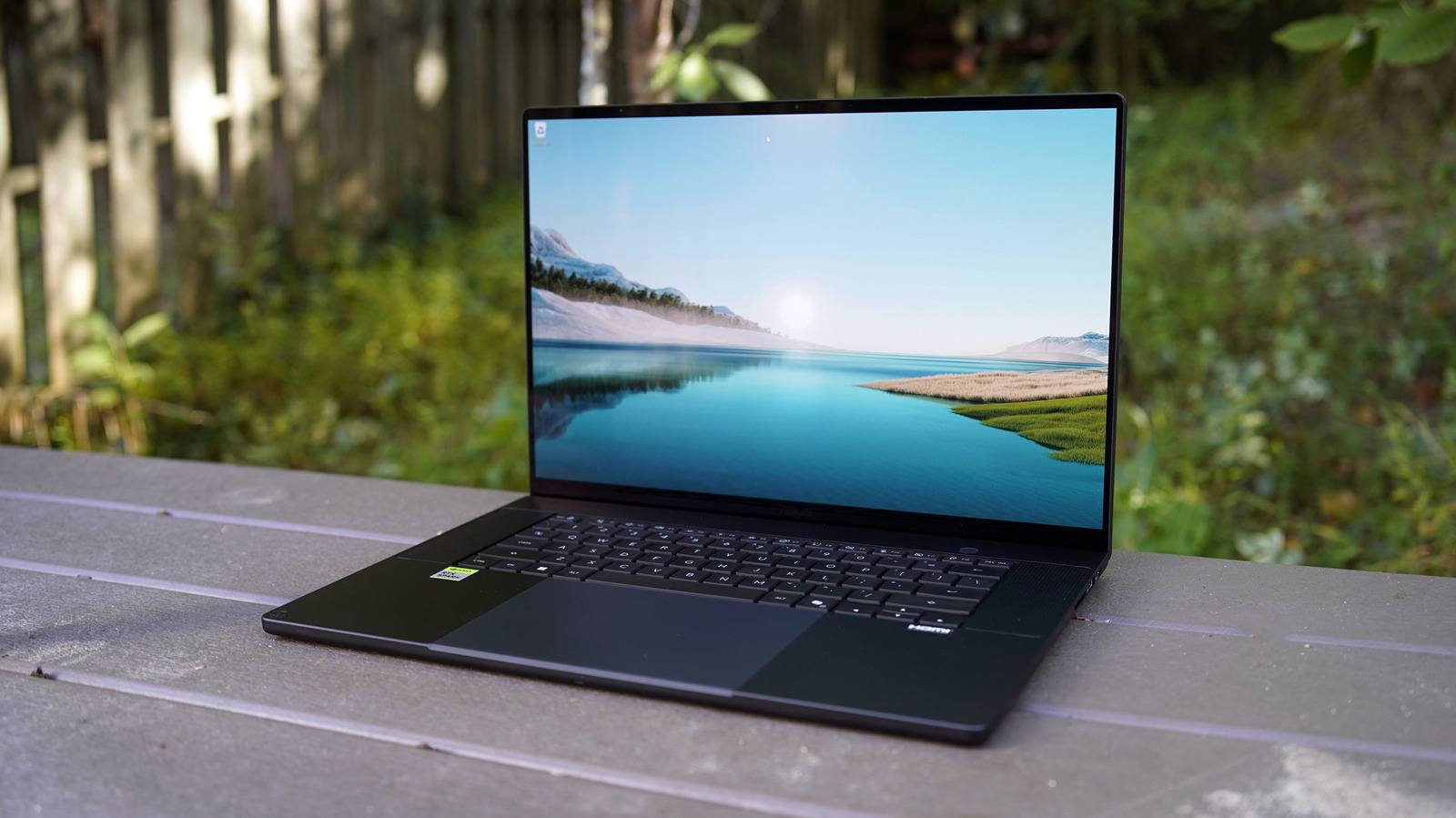
But it's really only meant for AI fanatics. Devindra Hardawar for Engadget RATING : 8.7 / 10 Pros Incredibly fast hardware Strong graphics Support for up to 128GB RAM Glorious OLED screen Cons Expensive Some games and software may have compatibility issues Case is a serious fingerprint magnet ASUS's first laptop featuring an RTX Spark chip confirms what I originally thought: NVIDIA's new PC platform really isn't meant for everyone. The ProArt P16 is yet another one of the company's premium notebooks focused on power-hungry creators — except this time, it's running NVIDIA's first major PC chipset, instead of an Intel or AMD processor.
Outside of the hype from Microsoft and NVIDIA, who are positioning RTX spark as a complete "reinvention" of the PC, the ProArt P16 is simply a nice laptop. It's particularly appealing if you're running local AI models, since it can squeeze up to 128GB of RAM into a relatively slim case. The downsides?
It's incredibly expensive, with a starting price of $2,800 and staggering increases as you add more RAM. (Spoiler: Our review model costs $7,000, mostly thanks to its 128GB of RAM.) And even though the ASUS P16 can play games well, you're paying far more here than you would for a dedicated gaming laptop. What makes the ASUS ProArt P16 RTX Spark special? Devindra Hardawar for Engadget Much like the ProArt PX13 we reviewed earlier this year, the ProArt P16 shows just how far ASUS has come with premium laptops.
It sports a beautiful and sturdy aluminum case, a wonderfully bright 16-inch OLED screen, a luxuriously-spaced keyboard and a similarly enormous haptic touchpad. It's MacBook-esque in its sleekness, except it has an ASUS badge. The ProArt P16 is even lighter than the 16-inch MacBook Pro, clocking in at 3.9 pounds, compared to Apple's 4.7 pounds.
From afar, the ASUS P16 doesn't look particularly special. But peek under the hood, and you'll quickly see what makes it different. It's powered entirely by NVIDIA's RTX Spark system-on-a-chip, which brings together a 20-core Arm CPU, a modern Blackwell GPU, and, as I mentioned, up to 128GB of unified memory.
If that sounds familiar, it's because it's very similar to the way Apple has configured its M-series chips, which was the main reason we've adored that company's computers since 2020. Unlike Apple's chip revamp, RTX Spark won't completely replace x86 hardware from Intel and AMD. You can think of it as a new fork of PC design aimed squarely at AI researchers and enthusiasts.
RTX Spark is also meant to coexist with Qualcomm's Snapdragon X chips, which use a similar Arm-based design for entry-level and midrange systems. As I've previously reported , there's a good chance that, despite a niche audience, RTX Spark will likely be a win for Windows PCs in general. Competition is always good for consumers — with NVIDIA planting its flag in the Windows world, you can certainly bet that AMD, Intel and Qualcomm will up their game with future hardware.
Unfortunately, RTX Spark likely won't help PCs revert back to their pre-AI boom pricing. It's yet another memory-hungry platform at a time when AI has already driven RAM prices through the roof. At least NVIDIA and PC makers are trying to stuff in all of the pro-level features RTX Spark owners may want.
In addition to the hardware I've mentioned above, the ASUS P16 also squeezes in just about every port you'd need, including three USB-C connections, USB Type A, HDMI, a headphone jack and a full-sized SD card reader. Ethernet would be nice, but that's become a true rarity in thinner, pro-grade laptops. In-use: The best Windows on Arm experience yet Devindra Hardawar for Engadget Using the ASUS P16 with RTX Spark reminded me of the first time I turned on a MacBook Pro with an M-series chip: Everything about it feels lightning fast.
I was up and running in no time, and I felt unstoppable as I downloaded several massive files simultaneously to start my benchmarking process. But of course, for a $7,000 system with 128GB of RAM, it damn well better feel speedy. I'll admit, I was a bit surprised by the ASUS P16's initial benchmark scores: Its PCMark 10 (Applications) figure was 3,000 points lower than the ultra-slim ASUS A16 I tested earlier this year, which was powered by a Snapdragon X2 Elite chip.
The RTX Spark system also lagged behind slightly in Geekbench 6's single-threaded CPU test, which is a sign that Qualcomm's chips just have more capable CPUs. But really, the star of the RTX Spark's design is its GPU, NPU and unified memory, and those all stood out in other tests. The ASUS P16 RTX Spark was 4,700 points higher than the MacBook Pro with M5 Max in Geekbench 6's GPU benchmark, which tests overall graphics performance.
The ProArt P16 also scored 3,895 points in UL Procyon's AI Computer Vision 2 benchmark, compared to 3,267 points from that same MacBook. Its 1,519 score in Procyon's AI Image Generation test was also 600 points higher than Apple's. Those Procyon benchmarks all clearly benefitted from the RTX Spark chip' s beefy graphics power.
Beyond benchmarks, the ASUS P16 was able to run OpenClaw and the large Qwen3.8 27B model, which alone takes up 42GB of RAM, while still leaving me with a ton of RAM for other tasks. At the same time, I was even able to play Control: Resonant and Cyberpunk 2077 at high quality settings without breaking a sweat. Sure, the fans sounded like they were about to lift the P16 off my desk, but there was never any noticeable slowdown in performance.
NVIDIA has previously said that the RTX Spark's graphics hardware is about on-par with the RTX 5070 mobile GPU, while also drawing much less power, and that held true in my testing. I was able to play Control Resonant at 70 fps while rendering the game in 1,440p with "ultra" graphics settings, ray-tracing set to medium and 4x frame generation. That's a game where the overall fidelity matters more than a triple-digit framerate, but I could get the ProArt P16 to 120 fps by lowering the graphics settings.
While I didn't have much trouble running other games, including Star Wars: Galactic Racer and Gears of War: E-Day , there's a chance you'll have trouble with some titles. Since RTX Spark is based on an Arm CPU, it has to rely on Microsoft's Prism emulator to handle most games. That introduces an immediate performance drop, as well as potential issues.
There are native Arm64 builds for popular titles like Fortnite , DOTA 2, Marvel Rivals and the upcoming World of Warcraft: Forever , so there's a chance that compatibility concerns will melt away in a few years. But if you don't want to worry about emulation troubles at all, you're better off with a standard gaming laptop running an Intel or AMD chip. There are also similar compatibility concerns for older Windows software in general, though I didn't encounter any weirdness during my testing.
The whole Windows on Arm experience received a huge upgrade when Copilot+ systems launched two years ago, and since then, it seems like Microsoft has worked to make its x86 emulation even more seamless. The ProArt P16's 16-inch "Lumina Pro" OLED screen was perfect for Control Resonant : It was able to show off dark black levels and extreme contrast in darker environments, but it also seared my eyeballs at times with its peak 1,600-nit luminance. It's definitely one of the brightest OLED screens I've seen on a laptop, and it directly competes with Apple's Mini LED MacBook Pro displays, which also top out at 1,600 nits.
That extreme brightness also made the ProArt P16 perfect for getting work done outside in the sun, as I try to eke out every bit of warmth I can before winter arrives. I was similarly impressed by every other aspect of the ASUS ProArt P16. Its wide keyboard and luscious key depth made typing a dream, and it also has one of the best haptic touchpads I've ever seen on a Windows PC.
While it would have been nice to have a quad-speaker setup, which has become increasingly common in large premium laptops, the ProArt P16's dual speakers still sounded solid. They also offer a bit of spatial audio support, thanks to Dolby Atmos. The only major downside to the ProArt P16, like most jet-black PCs, is that it's a horrendous fingerprint magnet.
Marks start appearing the instant you touch it, and heaven forbid you eat anything oily while using it. It takes just a few minutes for the P16 to start looking like a gross mess, and it's a bit annoying to keep clean. It'd be great to see ASUS adopt an anti-fingerprint material in the future.
The ProArt P16 lasted ten hours and 51 minutes in the PCMark 10 Applications battery benchmark, which is well below the 15-plus-hour range we've seen on many premium machines. It was also bested by Dell's latest XPS 16, which disappointed me when it clocked nearly 12 hours on the PCMark battery test. You'll at least be able to do more with the P16 on battery: I noticed that benchmarks and game performance didn't waver at all when I yanked the power cord.
According to NVIDIA, the overall efficiency of RTX Spark allows for a high performance curve without burning too much power. Should you buy the ASUS ProArt P16 with RTX Spark? Devindra Hardawar for Engadget If you're in the AI industry and know exactly how you're going to tap into the ASUS ProArt P16's RTX Spark hardware, you're the exact buyer NVIDIA is targeting.
AI workers can probably justify the high cost just to have the overall leg-up in AI performance, and they likely wouldn't worry so much about running older emulated Windows software. For everyone else, the ProArt P16, and every RTX Spark system, is really less of a sure thing. In particular, I'm thinking of gamers.
As I write this review, you could snag a similarly-sized ASUS Zephyrus G16 with an RTX 5070 GPU and 240Hz OLED screen for $2,124 at Best Buy. That'll get you better overall gaming performance, a higher refresh rate for fast-paced play and full compatibility with all Windows games without the need for emulation. Sure, it's nice the ProArt P16 can handle some games well, but gaming is only a secondary aspect of the RTX Spark platform.
It's unclear how well future games will perform, or what sorts of emulation bugs you'll find in niche titles. NVIDIA claims it's working with the major anti-cheat companies to support RTX Spark, but you may still run into some multiplayer titles that simply won't work on one of these new systems. And if you're mainly interested in editing multimedia content, you'd likely still be better off with an AMD or Intel-based system to have the widest compatibility with existing tools.
It's notable that Adobe has brought over its more iconic software to the RTX Spark platform, but it's less of a sure thing with many other multimedia apps. Wrap-up: A strong start for RTX Spark The ASUS ProArt P16 is an impressive premium laptop, undoubtedly. But its high starting cost and unique hardware make it something that's truly only tempting for AI professionals.
I'd give the entire RTX Spark platform at least a year before I could recommend it to general users or even gamers. There are already great PCs for those consumers — for now, RTX Spark is really only for the AI sickos.
Source: Engadget